Celia Poses for the Nativity Painting
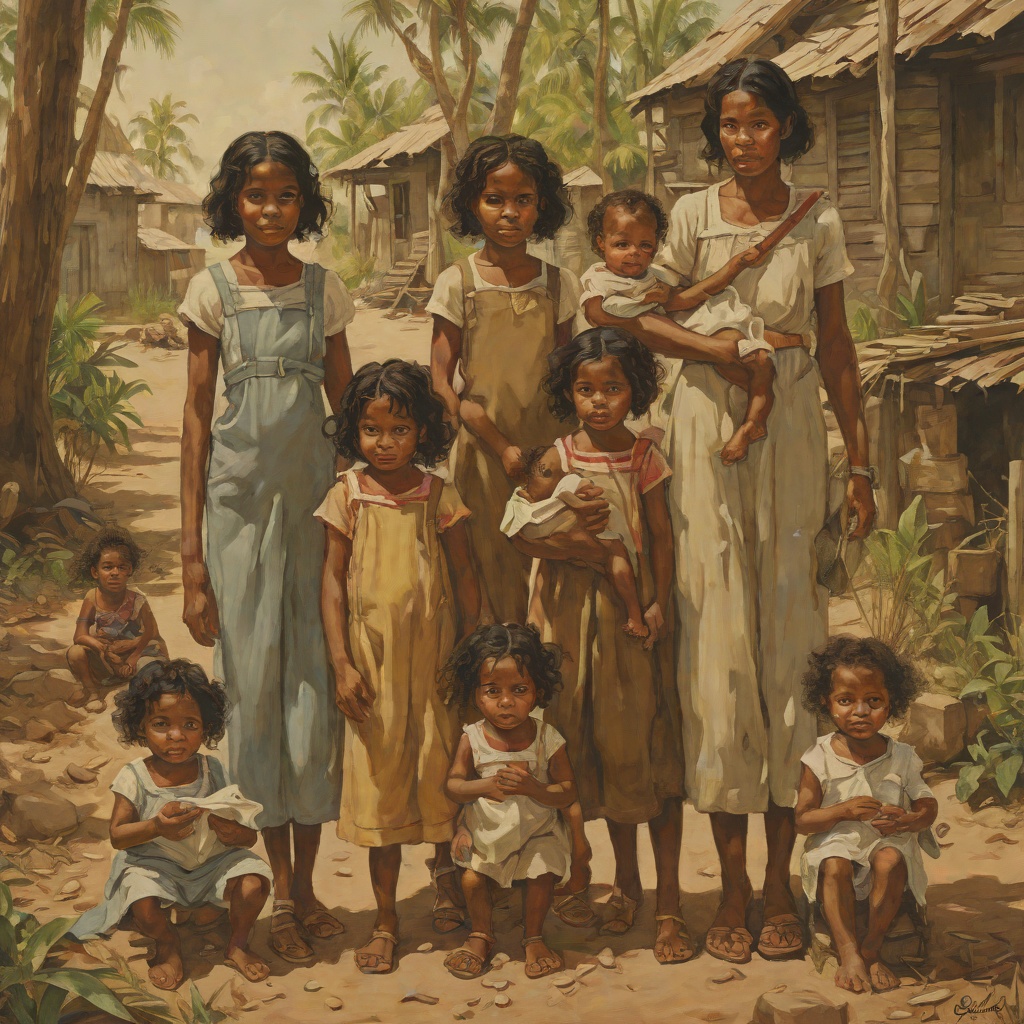
The Captain and Ann BarbaraIn the crowded, struggling household on Dover Street, where Mary Antin led what she called a busy, happy life of reciting lessons, writing midnight poetry, selling papers, posing, studying sociology, pickling bugs, and interviewing statesmen, one small episode stands out as a quiet measure of how far the family had traveled from the Old World. It was Miss Hale who first found a use for the Antins' "superfluous baby" — the tiny Celia, wrapped in swaddling clothes improvised by her mother after the fashion of the old country. Miss Hale, who had been painting Mary's portrait and paying her regularly with a silver coin, wanted a baby for a picture of the Nativity she was doing for her father's church. Of all the babies in Boston, it was Celia — the little Jewish Celia — who was chosen to pose for the Christ Child.
The Old World Background of the Episode
The episode draws its force from the religious world the Antins had left behind in Polotzk, within the Pale of Settlement. In that world, as Mary records, a girl's real schoolroom was her mother's kitchen, where she learned to bake, cook, manage, knit, sew, and embroider, while her mother instructed her in the laws regulating a pious Jewish household and in the conduct proper for a Jewish wife. Marriage was a sacrament among the Jews of the Pale; to rear a family of children was to serve God, and every Jewish man and woman had a part in the fulfilment of the ancient promise given to Jacob that his seed should be abundantly scattered over the earth. Parenthood was the great career, and woman's only work was motherhood. The religious observances that structured this life — the Sabbath, the dietary laws, the mezuzah on the doorpost, the prayers read in Hebrew with Yiddish translations — were not casual customs but the very fabric of identity. For a Jewish mother from this world to permit her child to pose for a Christian religious painting was, by the logic of the old dispensation, an act of profound transgression, one that would once have invited the gravest fears of evil consequence.
The Episode Itself
Miss Hale came to Dover Street several times to study the tiny Celia in her improvised swaddling clothes. The arrangement was casual and practical: Miss Hale needed an infant model for her Nativity painting, and the Antins had a baby. Mary notes, with characteristic precision, that it does not matter in this connection that the Infant that lies in the lantern light, brooded over by the Mother's divine sorrow of love, in the beautiful altar piece in Dr. Hale's church, was not actually painted from her mother's baby in the end. The final painting was not made from Celia. What matters is the mother's consent itself. The point, Mary insists, is that her mother, in less than half a dozen years of America, had so far shaken off her ancient superstitions that she feared no evil consequence from letting her child pose for a Christian picture.
The Significance of the Mother's Consent
The episode is a study in the quiet, unremarked transformation that Americanization works on the most intimate level of belief. Deborah Antin's consent is not a dramatic declaration or a conscious rejection of her faith; it is an unthinking, practical accommodation, the kind of change that happens before one notices it. The mother who would once have governed her household by the laws of a pious Jewish home, who would have known precisely what the old country would say about a Jewish child posing as the Christ Child, simply does not register the act as dangerous. The ancient superstitions have not been argued away; they have been outgrown, left behind like the swaddling clothes themselves, improvised in the American fashion rather than in the old-country style.
The Episode in the Larger Arc of Americanization
Celia's posing belongs to the same pattern of transformation that Mary traces through her own life and her sister Frieda's. The memoir repeatedly measures the family's progress in America by the loosening of Old-World constraints. Frieda, who came to America too late to avail herself of the gifts of an American girlhood, was engaged to be married before the family had been two years in the country, under what Mary calls the old dispensation; had she been two years younger, she might have dodged her circumstances and evaded her Old-World fate. Mary herself, by contrast, was sent to school and absorbed American ideas, becoming the quicker, the brighter one, the sister relied upon for glory while Frieda was relied upon for help. The Nativity episode is the inverse of Frieda's premature marriage: where Frieda's fate shows the old dispensation still reaching across the ocean to claim its own, Celia's posing shows the new dispensation taking hold even in the mother's most private convictions. The baby who posed for the Christ Child was, in the same years, being raised in a household where the father had already put his eldest daughter to work out of necessity and where the children were being sent hand in hand to school. The episode thus stands as a small, almost incidental proof of Mary's larger claim that she has shown what a real thing is this American freedom, and in what manner a certain class of aliens make use of it.
Narrative Role and Evaluation
Mary presents the episode with her characteristic blend of irony and affection, noting the absurdity of a Jewish baby posing for the Christ Child while simultaneously honoring the profound change the act represents. The episode is one of the memoir's quietest but most telling moments: it involves no struggle, no conflict, no conscious decision, only a mother's unremarked willingness to let her child take part in a Christian sacred image. That very casualness is the point. The transformation of the immigrant is not always accomplished through the public schools, the free libraries, and the lecture halls that Mary celebrates elsewhere; it is also accomplished in the small, unexamined accommodations of daily life, in a mother's decision that a Christian painting holds no terror for her Jewish baby. The episode thus belongs to the memoir's deepest theme: the remaking of a self and a family, not through dramatic rupture, but through the accumulated weight of small surrenders to the new world. And in the end, the fact that the painting was not actually made from Celia only sharpens the point — the change was never about the artwork at all, but about the mother who no longer feared it.